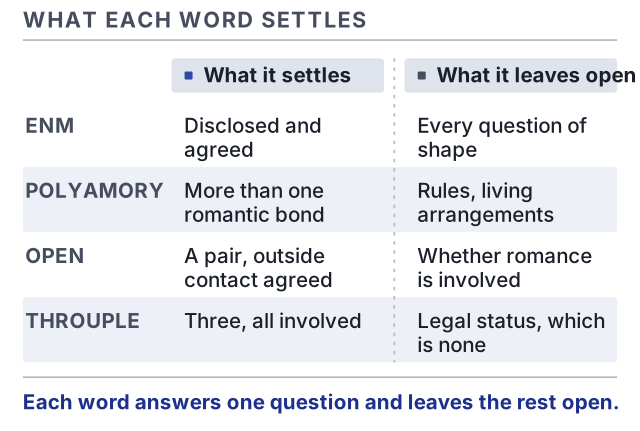
Ethical non-monogamy is the umbrella term for any relationship in which the people involved have agreed that exclusivity is not the rule. Everything else in this section sits underneath it. Polyamory, open relationships, swinging, monogamish arrangements and the throuple are narrower shapes. They are not alternatives to the umbrella.
That nesting is why this vocabulary causes so much argument. Two people may disagree about what an open relationship “really” is. Usually they are not disagreeing about ethics at all. They are using a broad word and a narrow word as though both were the same size.
What do the non-monogamy words actually name?
Each one names a structure, not a value. Polyamory refers to an arrangement built around more than one ongoing romantic relationship, with the knowledge of everyone involved. Monogamish means a relationship that is romantically exclusive but allows agreed sexual exceptions. The word exists because the older terms were too wide to describe that.
For example, a couple may agree to one named exception and treat the relationship as closed otherwise. People inside this vocabulary will call that monogamish. Everybody else calls it “open”. Both labels are in real use. Only one of them is precise.
Why is the overlap the whole problem?
Because the terms were coined at different times by different communities, and none of them was defined against the rest. Polyamory arrived from writing about multiple loving relationships. Swinging came from a different scene, with a narrower sexual meaning. Open relationship is a plain-English phrase that never had a fixed edge at all.
So every entry in this section names the words it is confused with. It then says where the line falls. General dating writing skips that part, and it is the part readers arrive looking for. A book-length treatment of how attachment plays out inside these structures is Jessica Fern’s Polysecure, published by Thornapple Press. This section stays with the words themselves.
Where do these terms come from?
Mostly from communities naming themselves, which shapes how the words behave. A term coined inside a scene carries assumptions its members never state. They fall away when the word reaches general use.
Consider throuple. Inside the vocabulary it names a three-person relationship in which all three are partnered with each other. In press use it is applied to any three people in any romantic setup. The narrow sense is the one the entries keep. The broad sense is what most readers have actually met.
What does this section deliberately not do?
It does not argue that any structure is healthier, more honest or more advanced. Entries describe arrangements people use, in the terms their users use, and stop there.
It also carries no guidance on negotiating, opening or ending anything. Those are decisions about one specific relationship. A definition is the wrong tool for them.