Sapiosexual means being drawn to people mainly by intelligence rather than by looks: by how someone thinks, argues, explains or writes. It is a self-applied label, most often seen on dating profiles. Its status as a sexual orientation is contested.
The entry below treats the word the way a dictionary does. It sets out what the word points at, where it came from, what it sits next to, and what it does not cover. It is not to be confused with sapphic. Sapphic is a separate word, about attraction between women.
What does sapiosexual look like in use?
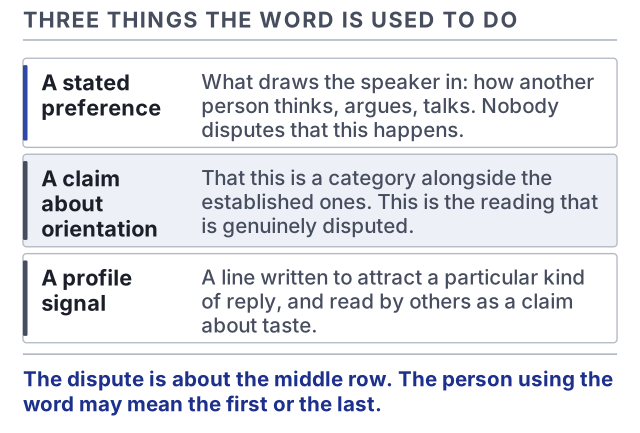
The word almost always appears as self-description, in the first person. Consider three scenes that carry most of the usage.
A dating profile carries the line “sapiosexual” near the top. The rest of the bio is built around books, arguments or work. The reader is meant to take it as a filter for who bothers to message.
Someone explains a change of feeling mid-talk. Nothing about the other person’s looks shifted. Attraction arrived when they took a question seriously. The label is used later, as shorthand for that pattern.
Someone uses the word to explain an absence. Dates looked promising and went nowhere once the talk stayed on the surface. Here the term describes a gap, not a person.
Where does the word sapiosexual come from?
The word is built on the Latin root sapere / sapiens — of persons, “to have discernment, be wise”, by the Online Etymology Dictionary’s gloss on sapient. To that it adds the -sexual ending that carries orientation terms in English. The build is plain to see, which makes the word easy to read on sight; what it did to the word’s spread is not something this entry can measure.
Its coinage traces to online journalling communities at the turn of the 2000s. A dated public LiveJournal entry by the user wolfieboy describes the word and states there that he had made it up himself a few years earlier. The post is the documented part; the earlier date is his own recollection, so this entry gives the era of the post and leaves the coiner’s own dating as what it is — a self-report.
The second stage of the word’s life is clearer. It moved from niche internet use into mainstream dating language when platforms began offering it as a self-description option. TIME reported OkCupid adding it to an expanded list of self-selected orientation options in the mid-2010s. Profiles started using it as a one-word bio. From there the term reached general media, which is where the argument about it started.
What is sapiosexual confused with?
Most often with demisexual, and after that with gender-based orientation labels and the everyday word type. The confusion comes from words that answer a different question. The table sets out which question each label answers.
| Term | Question the word answers | Key difference from sapiosexual |
|---|---|---|
| Sapiosexual | What quality does the person say attracts them? | — |
| Demisexual | Under what condition does attraction appear at all? | Names a required emotional bond, not a preferred trait |
| Bisexual | Which genders is the person attracted to? | Answers by gender; sapiosexual says nothing about gender |
| Asexual | Does sexual attraction occur, and how often? | Describes little or no sexual attraction rather than a preference within it |
| Type | Casual word for a pattern in who someone dates | Everyday register, claims no identity status |
Sapiosexual and demisexual are routinely run together, and the cleanest way to hold them apart is the question each one answers. Demisexual refers to sexual attraction that appears only after a close emotional bond. One names a trait in the other person. The other names a condition inside the relationship. See the neighbouring entries on demisexual and asexual for how those two labels behave on their own terms.
Why is the term sapiosexual contested?
Because two groups use the word in good faith and disagree about what kind of word it is. This dictionary names the disagreement and does not settle it.
The category objection. On the common reading, a sexual orientation describes attraction in terms of gender. Sapiosexual describes attraction in terms of a trait, the way “I like tall people” does. On that reading it is a preference wearing an orientation’s grammar. Many people in LGBTQ+ communities object to it sitting in the same list as labels that carry a history of legal and social cost.
The implication objection. Judgements about who is intelligent are not neutral. They tend to track things such as formal education, accent, first language, wealth and disability. Critics argue the label can therefore smuggle in social sorting under a flattering name.
The plain-use position. Others use the word without any of that freight. For them it is the fastest way to say that talk is what does it. They read the objections as too much weight on a profile line.
All three positions are in live circulation. A reader will find the term listed as an orientation in some places and rejected as one in others. Neither usage is a misspelling of the other.
What sapiosexual does not mean
This is the boundary of the word. It is the most useful part of the entry.
It does not mean high intelligence in the person using it. The label describes what someone is drawn to, not what they have. Reading it as a self-compliment is a common misread. It is also the source of much of the word’s mockery.
It does not name any gender of partner. A person using the label may be straight, gay, bisexual, or something else. The word says nothing on that axis. It does not replace a term that does.
It does not mean attraction only to the highly educated. Degrees, jobs and word choice are proxies people argue about. They are not the content of the definition.
It does not mean a diagnosis, a condition, or a state requiring anyone’s confirmation. Like every entry in this hub, it is a self-description. Nobody qualifies for it or fails to.
It does not rank above or below other identity terms. This dictionary makes no claim about which labels are more real. Contested is not the same as false. Popular is not the same as settled.
It does not describe behaviour. There is no sapiosexual way to flirt, date or text. Content promising one is folklore built on top of the word.
Where this page stops
This is a dictionary entry. It defines a word. It does not assess, diagnose or label any reader. It gives no advice on what to do with a label someone is trying on.
Some searches behind this page are heavier than vocabulary: distress about identity, pressure from other people, or feeling unsafe. That belongs with a licensed professional or a helpline, not with a glossary.
For the surrounding terms, see the identity and orientation hub. The full A–Z index of dating terms covers the rest.
Checked: 26 August 2026. State: current — the term is in steady use and its status remains disputed; this entry is re-read as that argument develops.