Aromantic means experiencing little or no romantic attraction. It is a word people use about themselves. It describes how attraction shows up for them. It makes no claim about their capacity for love, their sex life, or their relationships. It is not a diagnosis, and it needs no confirmation from anyone else.
The short form is aro. The word is built from the prefix a-, meaning without, plus romantic. Not from aroma, and not from any word for coldness. It is often searched together with asexual. That is a separate label about a separate kind of attraction.
What does aromantic look like in use?
The label describes attraction. So the scenes where it gets used are about how romance registers for a person, not about how they behave. Consider four of them.
Someone reads a story where two characters fall in love. They follow the plot without recognising the feeling being described. The interest is real. The pull the story assumes is not there.
Someone has close, long-standing, mutually important people in their life. They call those bonds friendship rather than romance. That is not a downgrade. Romance is simply not the word that fits what they feel.
Someone dates, likes a partner, and enjoys the time together. Still the romantic pull the setting is meant to produce does not arrive. Some people in that spot use the label. Others use a spectrum term instead.
Someone uses aro alongside another label: aroace, aro bisexual, aro and partnered. The word covers one axis only and leaves the rest open.
Where does the word aromantic come from?
The term grew out of online asexual communities, in the first decade of the twenty-first century. AUREA’s history of the aromantic community places the earliest use it has found on a Yahoo mailing list. That list preceded the Asexual Visibility and Education Network (AVEN). The word is attested on the AVEN forums soon afterwards, and in wider community use by the end of that decade. Those communities needed a way to say that romantic and sexual attraction do not always run together. The vocabulary that came out of that need is now called the split attraction model — a name the community gave it later.
Once attraction was split into two axes, the low end of the romantic one needed a name. Aromantic filled it. It uses the same a- prefix already carried by asexual.
That earliest use is a dated post by a named list member, so this entry does not tell you the origin is unknown. What it will not do is turn one archived post into a coinage. AUREA records the earliest use found so far. That is a different thing from a first attestation. It names no author of the word. The setting is well attested — it was English-language ace and aro community writing on the early social web. Tumblelogs, short video and campus LGBTQ+ groups carried it into wider use later. So did community symbols such as the green-striped aromantic flag and an annual aromantic spectrum awareness week.
What is the aromantic spectrum?
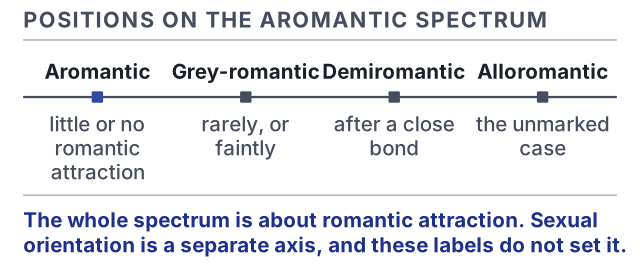
Aromantic spectrum is an umbrella for identities near the low-attraction end of the romantic axis. It is shortened to arospec. It exists because people found the split between aromantic and allo-romantic too coarse for what they were describing.
| Term | What the word points at | Key difference from aromantic |
|---|---|---|
| Aromantic (aro) | Little or no romantic attraction | — |
| Grayromantic | Rare, faint or situational romantic attraction | Attraction occurs, but seldom or weakly |
| Demiromantic | Romantic attraction only after a close emotional bond forms | Conditional rather than absent |
| Aroflux | Romantic attraction that shifts in intensity over time | Describes movement along the axis, not a fixed point |
| Aroace | Aromantic and asexual together | Combines two axes in one label |
| Allo-romantic | Experiences romantic attraction in the usual way | The contrast term the spectrum is measured against |
Two cautions about the table. It records how words are used, not how real anyone’s identity is. The spectrum is not a ladder. No position on it is a lesser version of another. And the labels are self-applied. People move between them, use several at once, or use none.
What is aromantic confused with?
Asexual is the word for little or no sexual attraction. It is the most common mix-up here, and the one behind most searches. Asexual is about sexual attraction. Aromantic is about romantic attraction. The two labels combine freely. That is why aroace exists as a separate word.
Demiromantic and demisexual. Demi- words describe attraction that appears only after a close bond. Demiromantic sits on the romantic axis and is usually counted as arospec. And demisexual sits on the sexual axis. Neither means the same as aromantic. Aromantic describes absence, not a condition being met.
Celibacy and voluntary singlehood. Both are choices about conduct or circumstance. Aromantic describes attraction and predicts neither.
Avoidant attachment or emotional detachment. These come from the language of psychology and describe patterns in how someone relates. Aromantic is an identity term about attraction. Reading one as evidence of the other is a category error. It is the error aro communities push back on most often.
What aromantic does not mean
This is the part the listicles skip. For this word it does most of the work.
It does not mean being unable to love. Family love, friendship, chosen family and committed platonic bonds all fall outside the term’s scope. Many aro people describe those bonds as the central ones in their lives. Queerplatonic is the community term for bonds that are serious without being romantic. It exists for exactly that reason.
It does not mean asexual. The two labels are independent. Aromantic people may be of any sexual orientation, including allosexual.
It does not mean single, and does not mean celibate. The word makes no claim about relationship status, sex, marriage, or children.
It does not mean cold, damaged, or untreated. Aromantic is not a symptom, a wound, or a stage before something else. This entry offers no causes for it. A dictionary that explains why someone holds an identity has stopped defining a word.
It does not mean a shortage of the right person. The label describes attraction as it is, not attraction that is merely on hold.
It does not mean every aro person feels the same. Some are romance-repulsed, some are romance-indifferent, some are romance-favourable and happily partnered. The umbrella covers all three.
Where this page stops
This is a dictionary entry. It defines a word. It does not test anyone, sort anyone into a label, or judge a label someone has chosen. The only person who can apply aromantic to a reader is the reader.
Some searches carry more than a word question. Distress about identity, pressure from other people, or feeling unsafe belongs with a licensed professional or a helpline, not with a glossary.
For the surrounding terms, see the identity and orientation hub, the neighbouring entry on asexual, or the full A–Z index of dating terms.
Checked: 26 August 2026. State: current — the term is in settled use in ace and aro communities and increasingly outside them; this entry is re-read as general usage catches up.