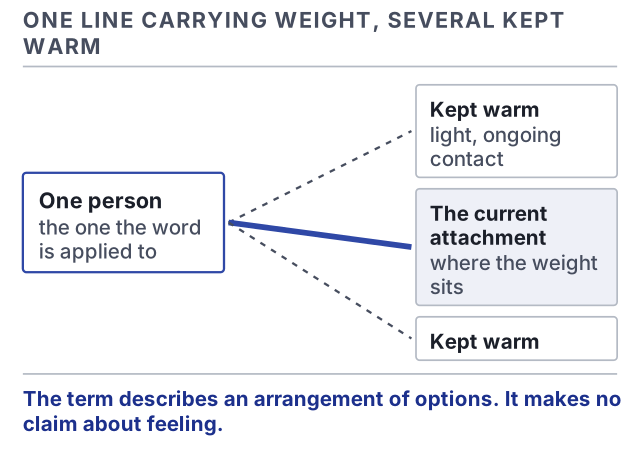
Cushioning is dating slang for keeping one or more backup prospects in light contact while already attached to someone. A breakup would then land softly instead of leaving you alone. It names an arrangement of options, nothing more.
Not to be confused with the far more common technical senses of the same word. Those are cushioning in running shoes and midsole foam, cushioning in packaging and shipping, and cushioning in engineering for absorbing shock. They share the image of a soft landing. None of them belong to dating vocabulary.
This entry is a dictionary entry: meaning, origin, confusions, and the edge of the word. It does not assess anyone’s contacts and offers no method for handling them.
What does cushioning mean?
Cushioning means keeping one or more side connections in reserve while a main relationship is in place or forming. The reserve contacts, the cushions, get enough attention to stay reachable and no more.
The emphasis sits on function, not on volume. Cushioning is not a count of how many people someone texts. The idea is that certain contacts are held for the case where the main one ends. That is why the word is hard to apply from outside. For instance, a warm check-in message looks the same whether it is friendship, habit or a reserve. Only the purpose separates them.
Two features hold in the standard sense of the word. The contact is kept low-definition on purpose. The person holding the cushions is already committed, or close to it, elsewhere. Remove either one and commentators reach for a different word.
What does cushioning look like in use?
In use, cushioning is applied to contact kept warm on the side while someone is already attached elsewhere. Consider three scenes that show how the label is applied. These are illustrations of the vocabulary, not signs to measure anyone against.
- The kept thread. A conversation with someone from an app never quite closes. It goes quiet for weeks, then restarts with a light message. Meanwhile the sender is in a relationship the other contact has never heard about.
- The rotating ex. Occasional warm check-ins with a former partner, timed to the rough weeks of a current relationship. Writers use the word here because the contact rises and falls with the state of something else.
- The unmatched-but-not-deleted profile. Apps left installed, conversations left open, no meetings arranged. The point of the label is that the option is kept rather than used.
Where does the word “cushioning” come from?
The word comes from ordinary English: a cushion softens a fall. Applied to dating, the fall is the end of a relationship and the cushions are the people who make it less abrupt.
Who first used it in the dating sense is not established. No source this glossary can name identifies a coiner or a first printed use. What is documented is the route. The word appears in online advice writing and community definition lists in the mid-2010s, in the same wave that carried breadcrumbing and stashing. It reached wider circulation later through short-form video. That timing is rough and widely repeated rather than closely sourced. The dating sense is documented in mainstream coverage of app-era dating slang by the second half of the 2010s. The source is The Boston Globe’s Ideas piece on the vocabulary the dating apps produced, which sets cushioning out alongside breadcrumbing.
Unlike most words in this hub, cushioning has stayed mainly a noun-and-gerund pair. To cushion someone is rare. Cushioning and being a cushion are the forms in use. That suggests the term is read as a description of a setup rather than of an act.
What is cushioning confused with?
Cushioning is confused most often with benching, breadcrumbing and monkey barring. The table below sets out where each one differs.
| Term | What it names | How it differs from cushioning |
|---|---|---|
| Cushioning | Keeping reserve prospects in light contact while attached elsewhere | — |
| Benching | Being kept available by someone who is not choosing you | The same picture named from the reserve side; cushioning names it from the holder's side |
| Breadcrumbing | Small, repeated contact that never advances | Describes the message pattern only; cushioning describes why contacts are held |
| Monkey barring | Moving to a next partner before releasing the current one | A completed transfer; cushioning is an option kept unused |
| Stashing | Keeping a partner hidden from friends, family and public life | Concealing one relationship; cushioning is maintaining several contacts |
| Open arrangements | Multiple connections by explicit agreement | Agreed and disclosed; cushioning is defined by the absence of that agreement |
Benching is the closest neighbour and the most useful contrast. The two words often describe one situation from two ends. A person holding several warm contacts is said to be cushioning. A person who notices they are one of those contacts is said to be benched. Cushioning is plural and looks outward from the centre. Benching is singular and looks in from the edge. That term has its own body of writing elsewhere and is named here only for the contrast.
Breadcrumbing overlaps in behaviour and differs in what the word is about. Breadcrumbing names the shape of the messages — thin, repeating, never advancing. Cushioning names the purpose behind keeping them going. Cushioning usually involves breadcrumbing. Breadcrumbing often has nothing to do with a reserve. See breadcrumbing for that word on its own terms.
Monkey barring is the finished version of what cushioning leaves potential. One is holding an option, the other is swinging to it. Stashing points the other way: one relationship kept out of sight rather than several kept in reach.
Open and negotiated arrangements are outside the term entirely. Cushioning carries an assumption of non-disclosure. Where several connections are agreed and known, none of this vocabulary applies.
What does cushioning NOT mean?
Cushioning does not mean having friends, dating around while single, or a settled verdict about cheating. The boundary of the term is the part most trend listicles skip:
- It does not mean having friends. Ordinary contact, such as friendships, ongoing group chats and civil terms with an ex, is not a cushion. The word is applied only when contact is held as a reserve.
- It does not mean dating several people while single. Seeing more than one person before anything is defined is a different situation with different words. Cushioning assumes an existing or near-existing commitment.
- It does not settle whether anything was cheating. The term covers a wide range. The line sits in what a particular couple agreed. No definition can decide that from outside.
- It does not name an intention proven. Calling contact a cushion is a guess about purpose. The label is contested more than most because the behaviour and the innocent version look the same.
- It is not a personality type or a condition. Cushioner is slang, not a category anyone can be assessed as belonging to.
- It is not benching. Same scene, opposite vantage point.
- It is not the shoe, foam or packaging sense. Those are the dominant meanings of the English word and share only the metaphor.
Where this page stops
This entry defines a word. It cannot say whether the word fits any particular arrangement. It offers no scripts, steps or verdicts. That is advice, and advice about a specific situation needs someone who knows the specifics.
If reading about this touches something heavier than doubt about someone’s contacts, take it elsewhere. If a relationship feels unsafe rather than merely unclear, a licensed professional or a helpline is the right place. A glossary is the wrong instrument, and pretending otherwise would be the more harmful choice.
Related entries
Cushioning sits in the app-era behaviour hub. That hub holds the other words this glossary keeps for how contact works on dating platforms. The full alphabetical list of terms, including short definition-only entries, lives in the A–Z index.
Entry checked: 26 August 2026. Usage: current — the word is in use in dating writing and competes with older vocabulary for the same behaviour.